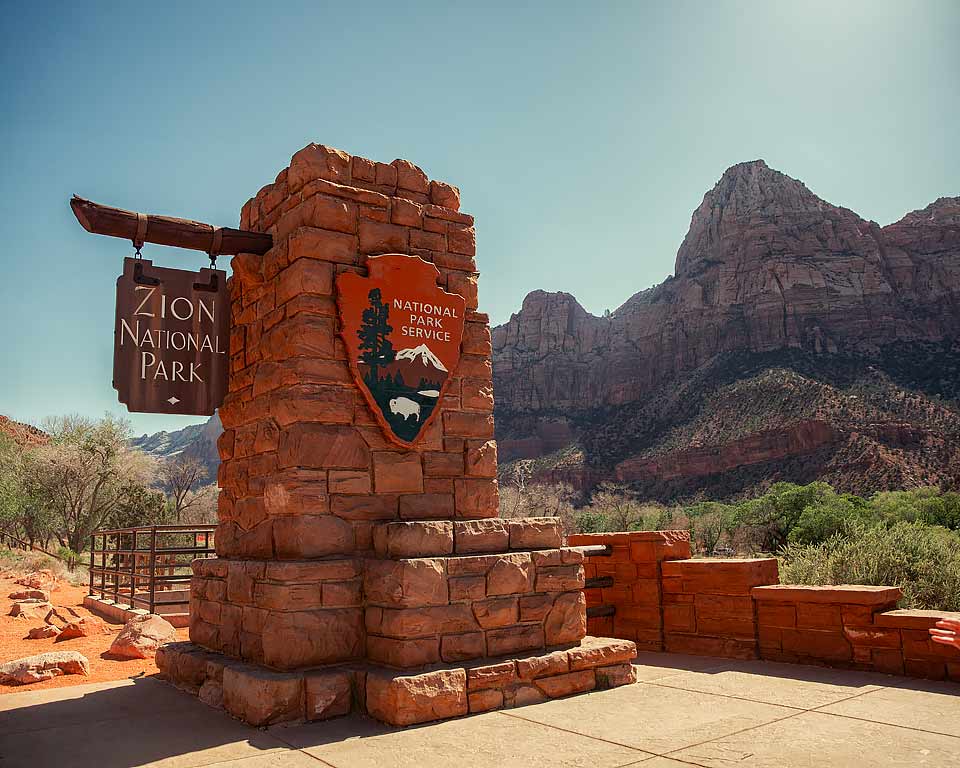
Our journey began among the towering red cliffs of Zion National Park. As a photographer, experiencing the scale of these massive stone walls is a powerful experience. Zion is a place of grand proportions, where the landscape feels like a natural cathedral carved by water and time.
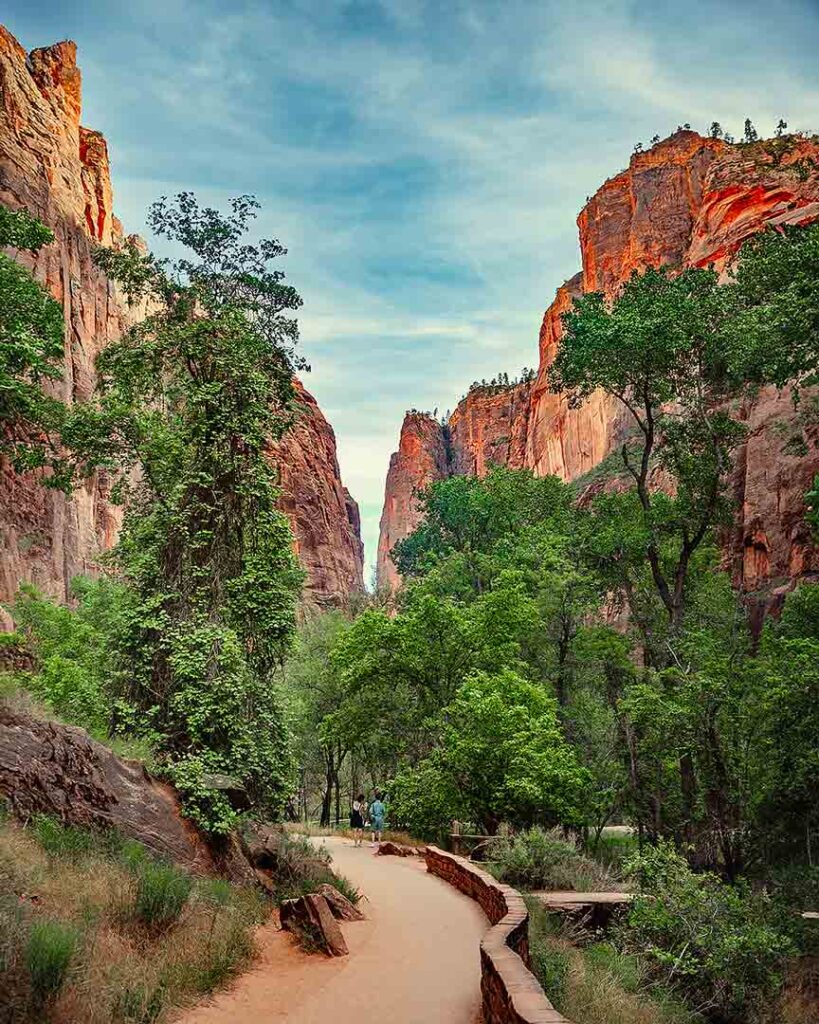
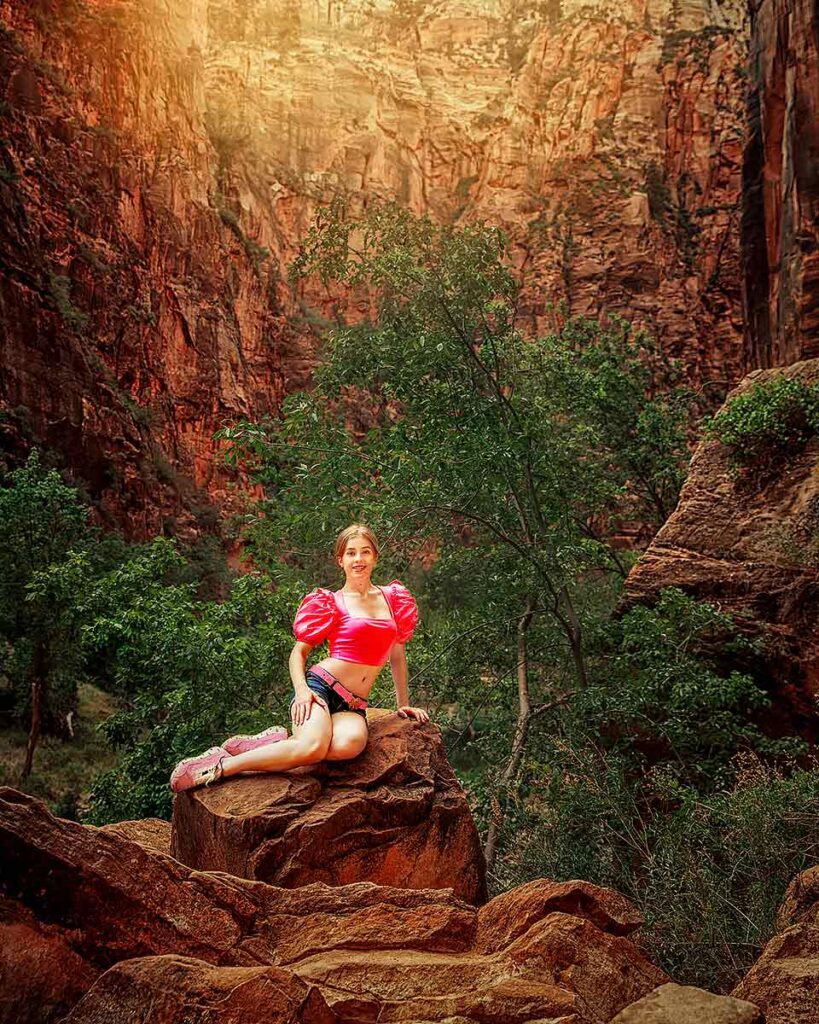
One of the first things I noticed as a portrait photographer is how the canyon walls act as massive, warm reflectors. In the early morning and late afternoon, the sun hits the high orange peaks and bounces a soft, golden glow down to the canyon floor. This creates a beautiful, natural light for portraits that you cannot find in a studio.
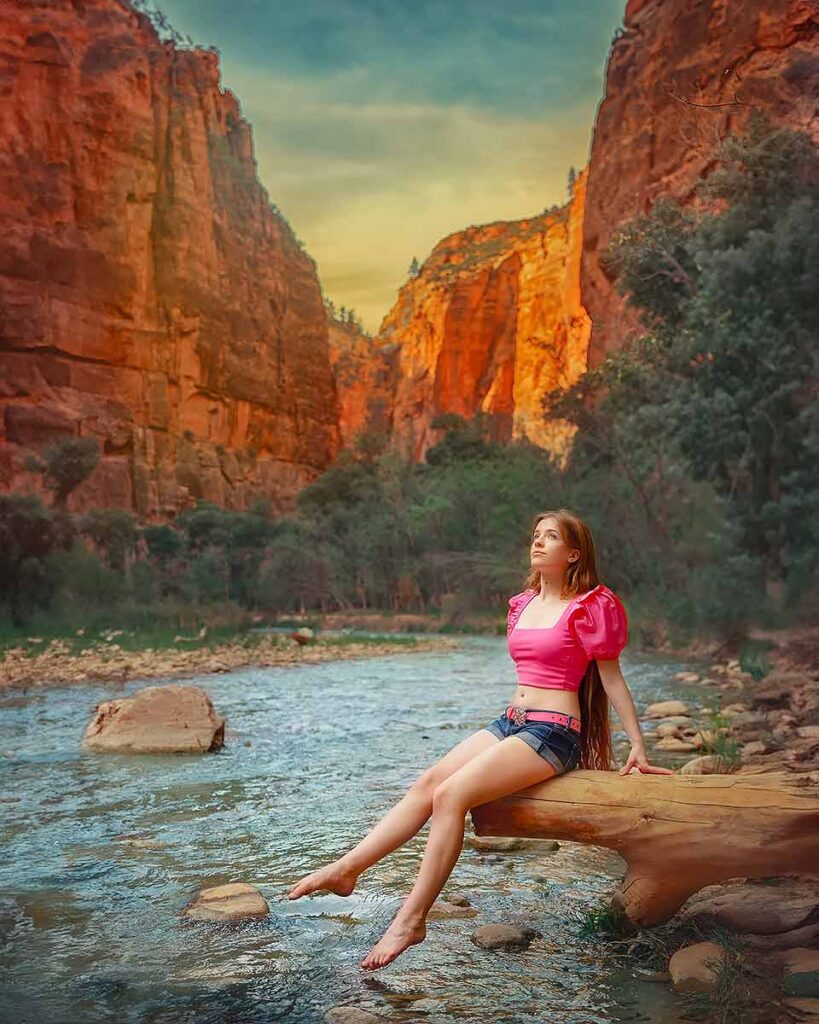
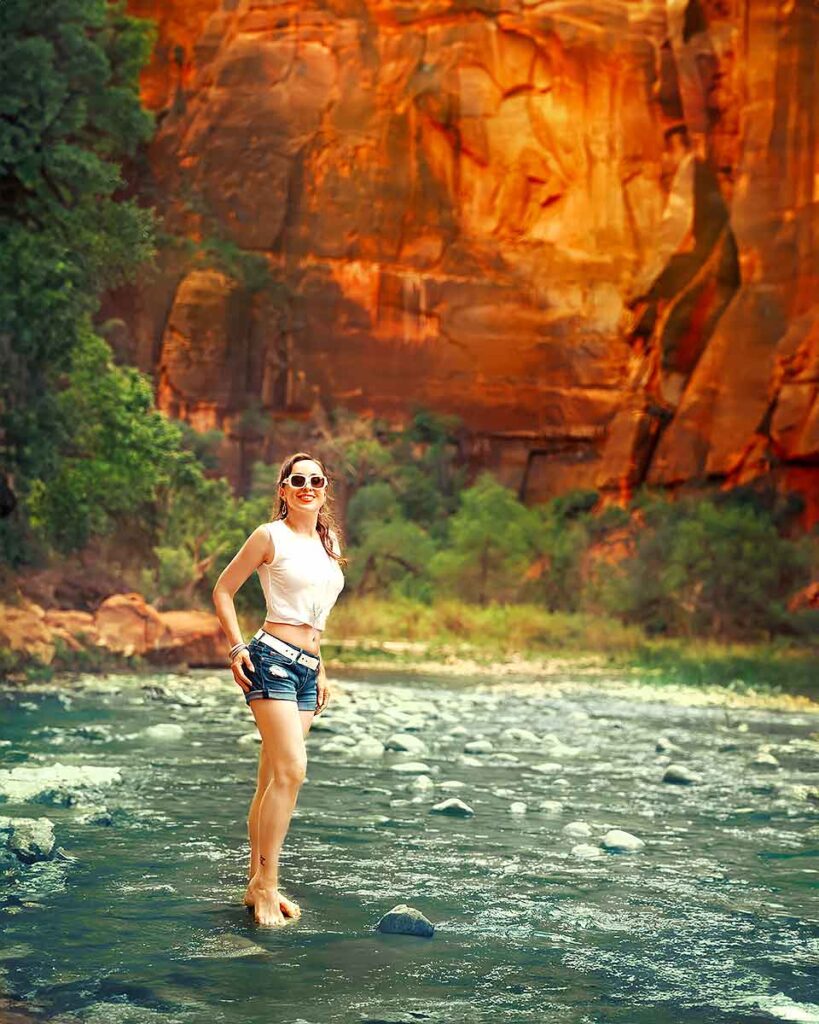
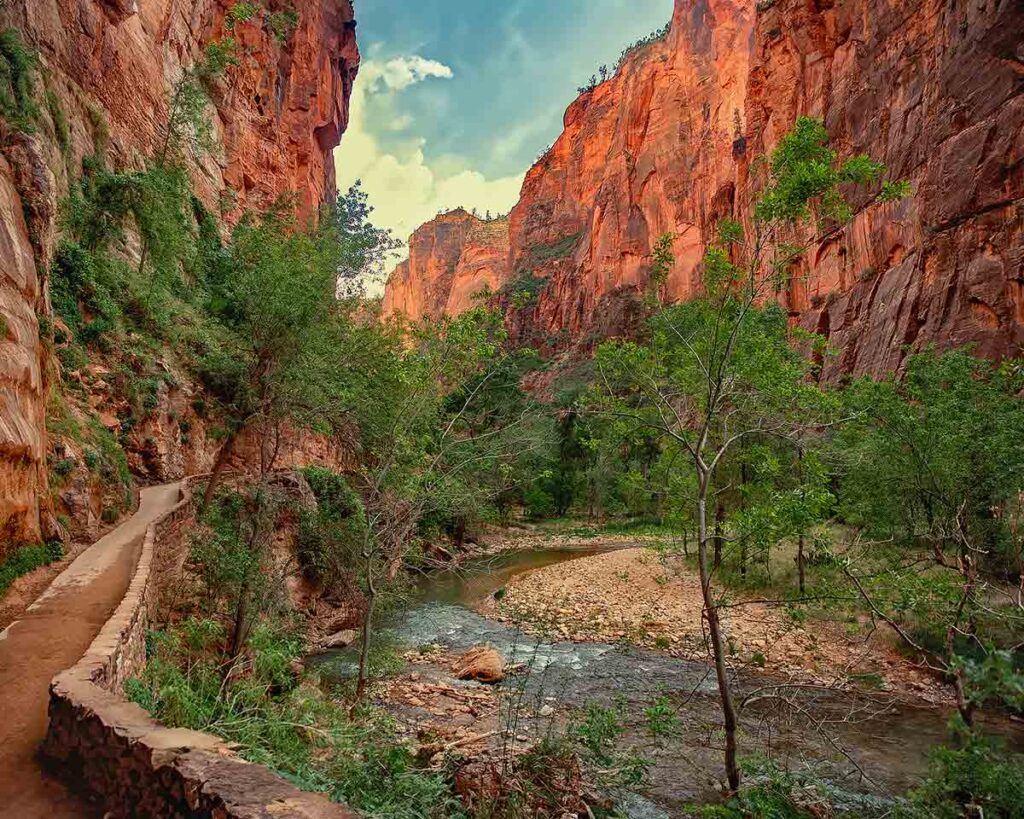
As we walked toward the Narrows, the canyon walls started to close in. The contrast between the bright sun on the high peaks and the cool shadows by the water made every photo feel dramatic and timeless.
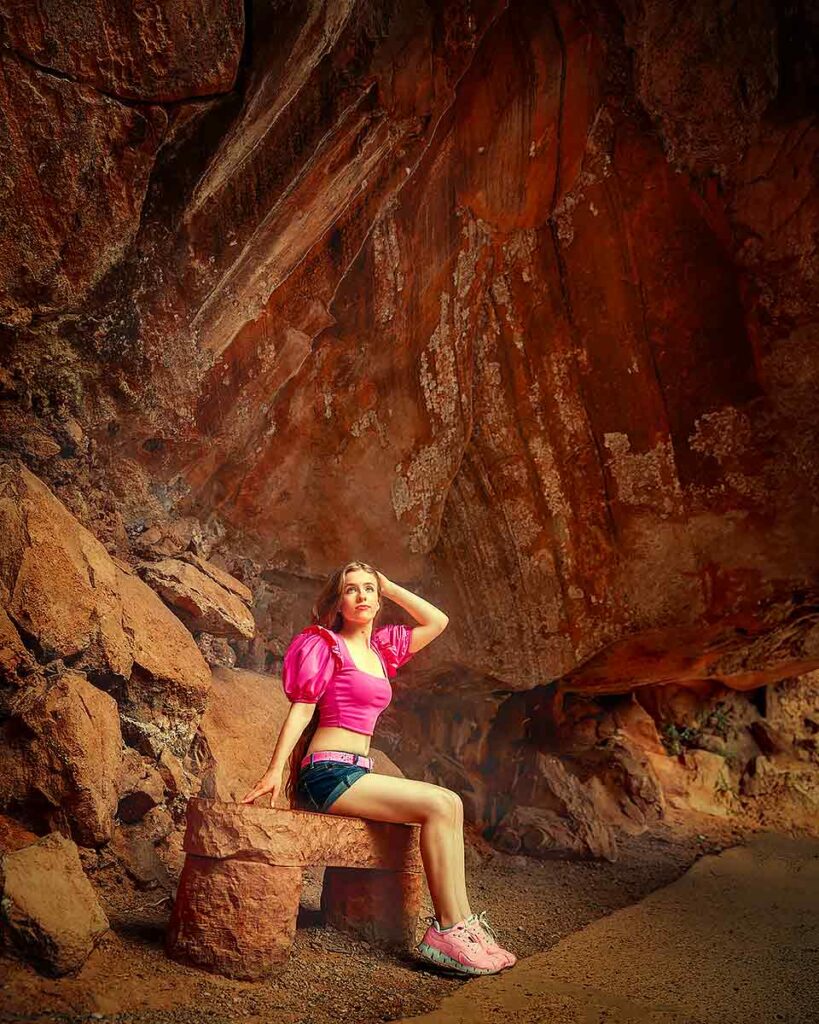
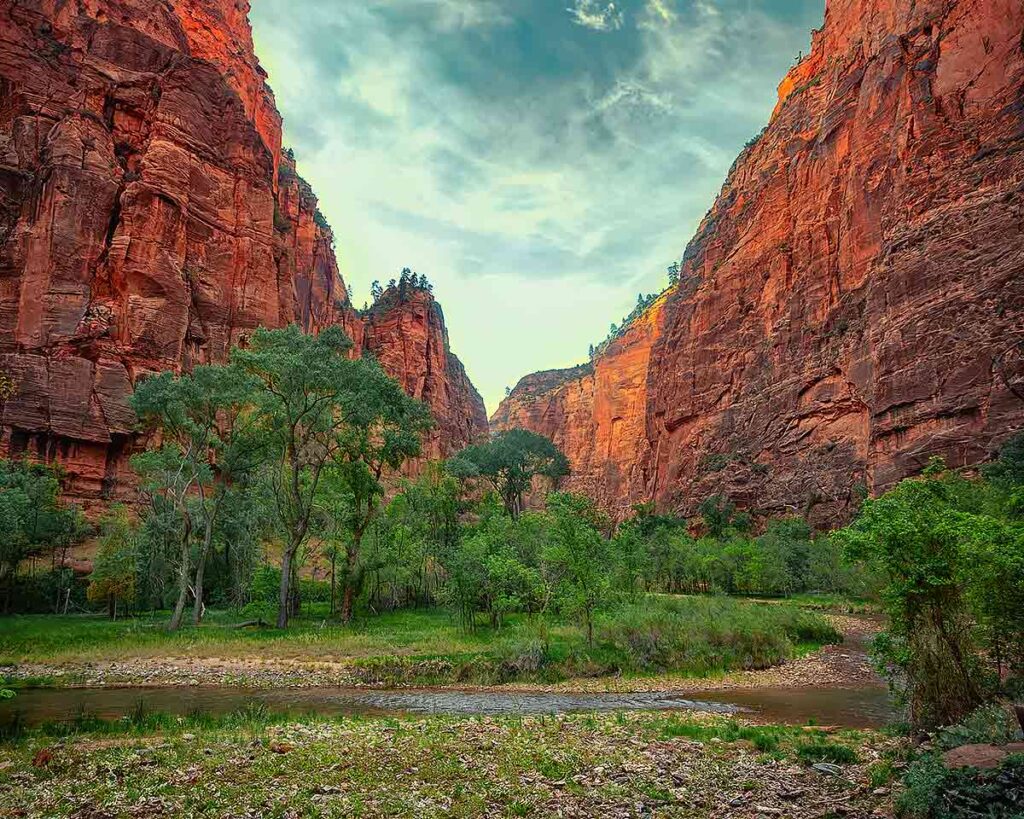
My walk took me along the Riverside Walk, following the water until the canyon walls began to close in. This area is a great location for landscape photography and a perfect spot for portraits. The tall cliffs create a natural frame for my pictures, drawing the eye toward the center of the image. The trail eventually leads to the start of the Narrows. Even though we were not equipped to hike into the water where the pavement ends, the views along the river bank are impressive. Standing there with my camera, I could feel the power of the water that shaped these massive stone walls.
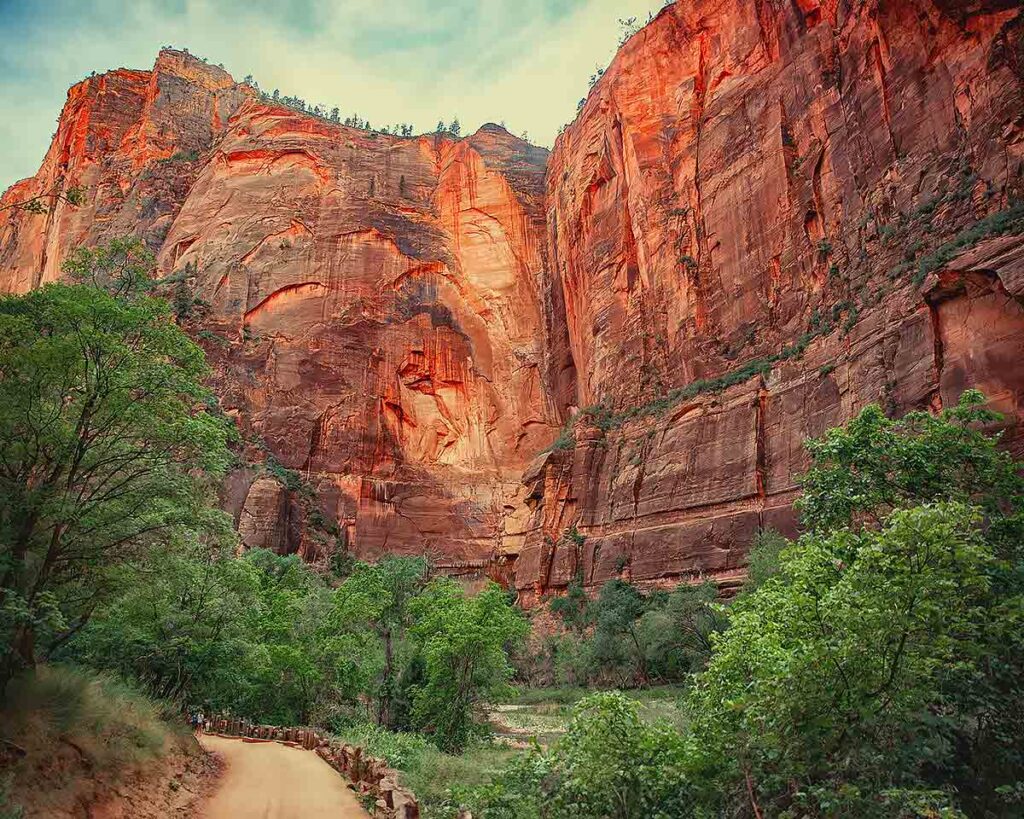
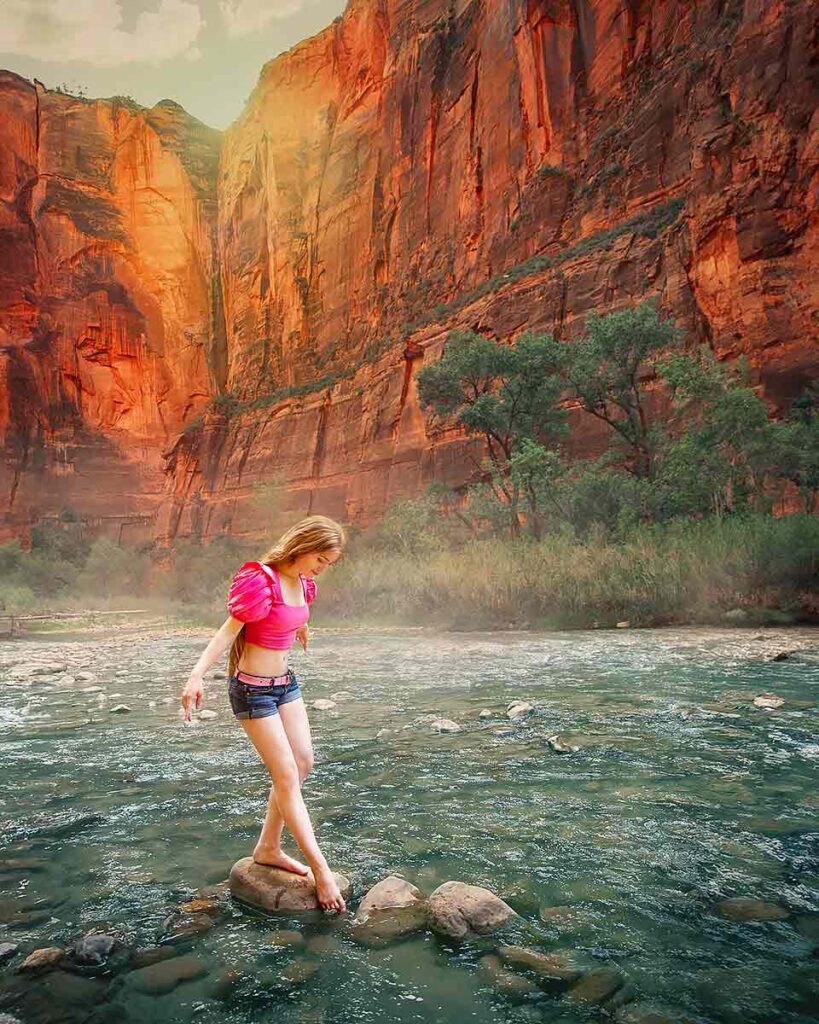
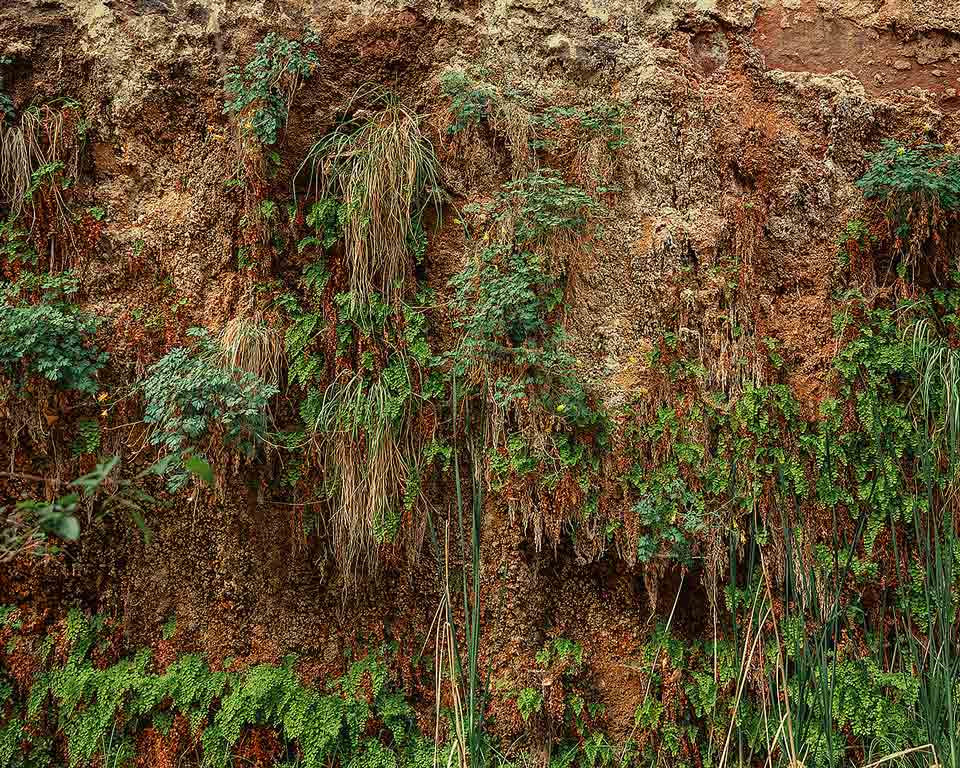
It was definitely cool to see the hanging gardens along the trail. Water actually seeps through the solid rock, allowing green ferns and flowers to grow right off the cliff side. It is a beautiful reminder of how soft life can thrive in such a rugged place.
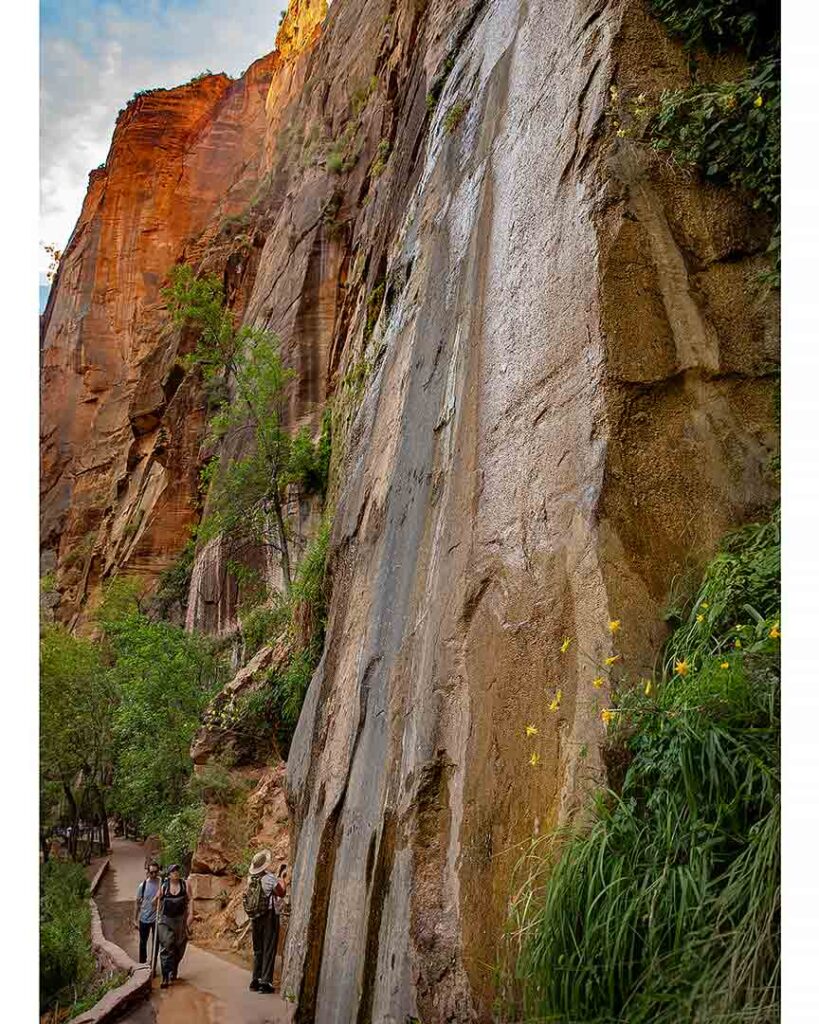
The tall cliffs create a natural frame for photos, making the person in the shot look small against the ancient, carved stone. It really puts the power of nature into perspective.
On the second day of our trip, the landscape shifts from the canyon floor to the high-country wonders along the Zion-Mount Carmel Highway. We drove the iconic Zion-Mount Carmel Highway. This stretch of road is a masterpiece of engineering, winding through some of the most dramatic scenery in the park. As a photographer, I loved the contrast of the red asphalt against the towering orange and cream-colored peaks.
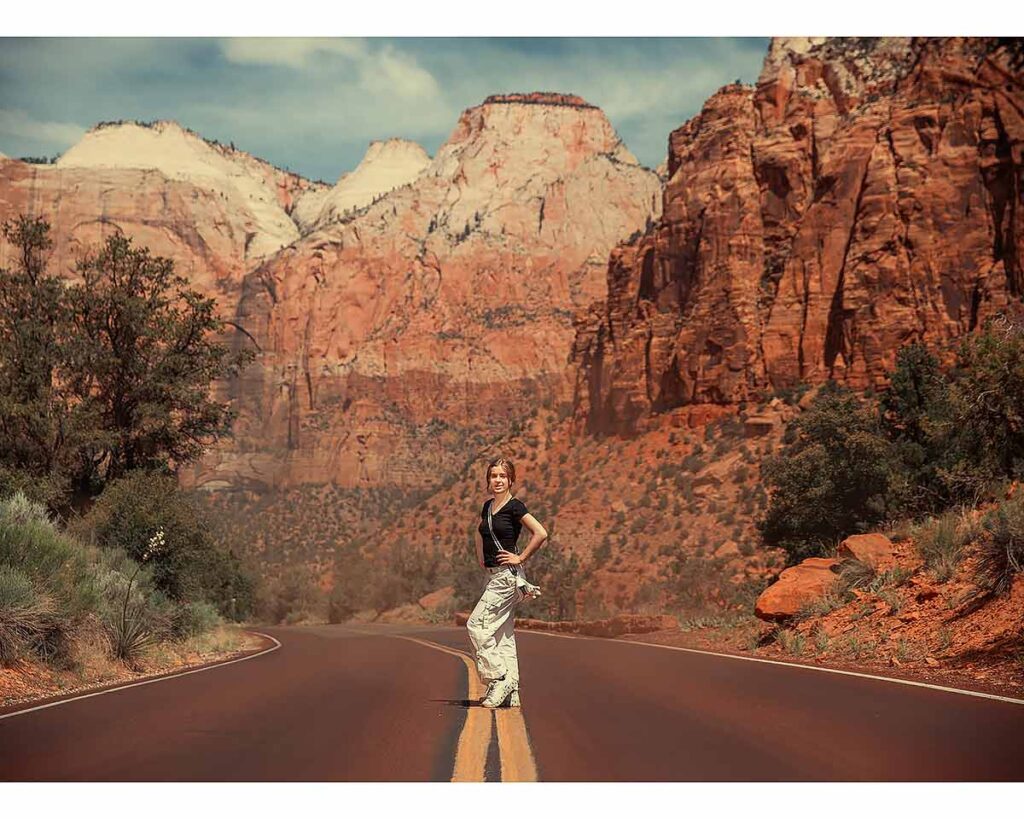
The winding road serves as a perfect leading line for landscape photography, guiding the eye through the massive sandstone formations. As we approached the famous tunnel, the views became even more impressive. The road feels like a small ribbon draped over a giant, ancient landscape, providing a unique perspective of the canyon walls from above.
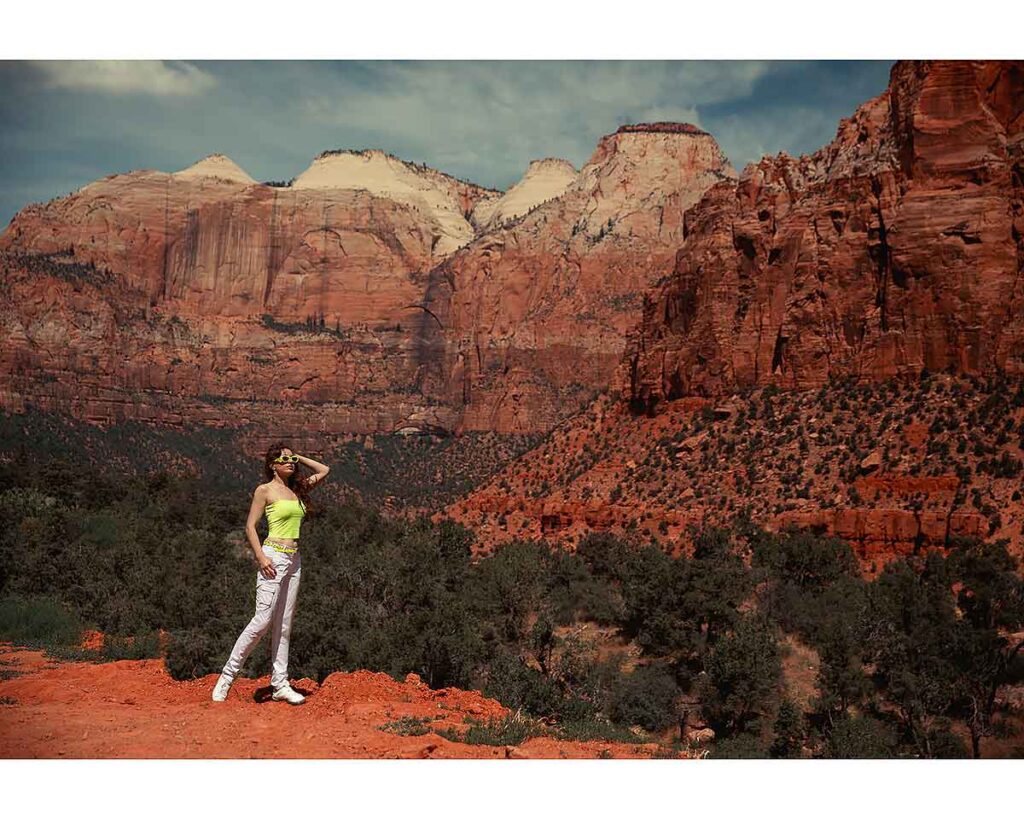
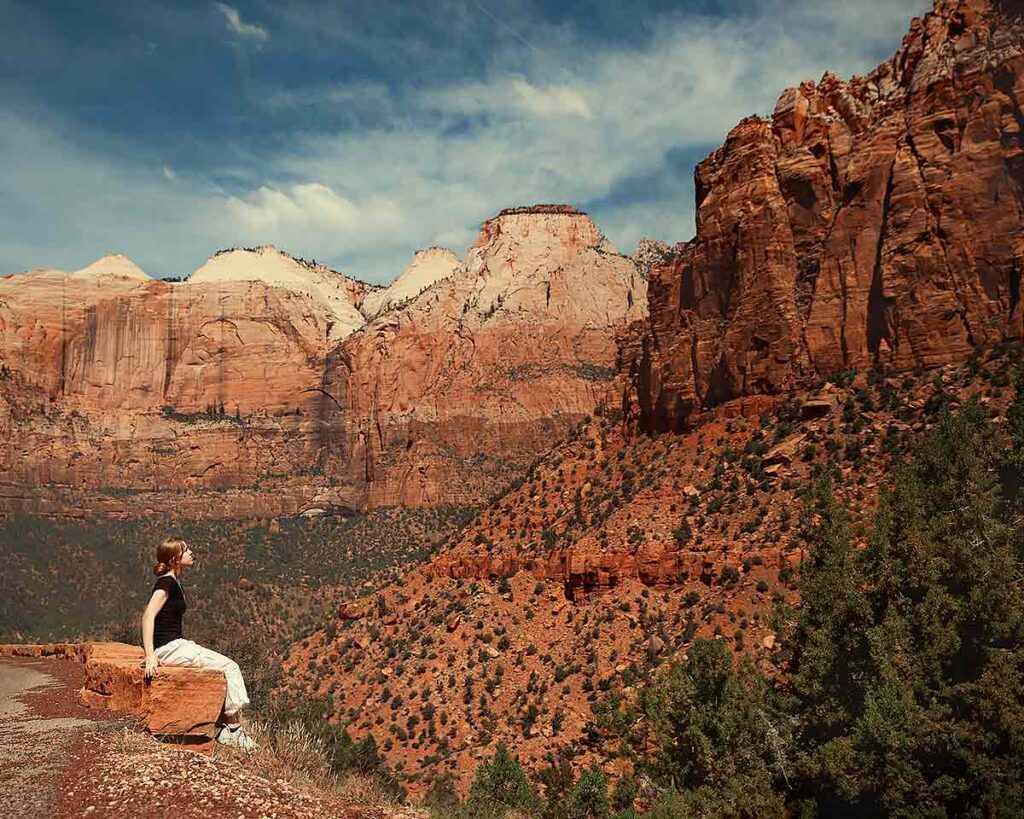
As the road climbs higher, the overlooks provide a different perspective of the canyon floor and the towering rock faces above. We found a great spot to sit at the edge of the stone wall, looking out over the winding highway as it disappears into the massive scale of the canyon. The natural textures of the vertical cliffs and the vastness of the space make it a dream location for a photographer.
After passing through the mountain tunnel, the landscape changes completely. The massive canyon walls open up into rolling mounds of cross-bedded sandstone. This area of East Zion is a favorite for photographers because the textures in the rock are so distinct and accessible right from the road.
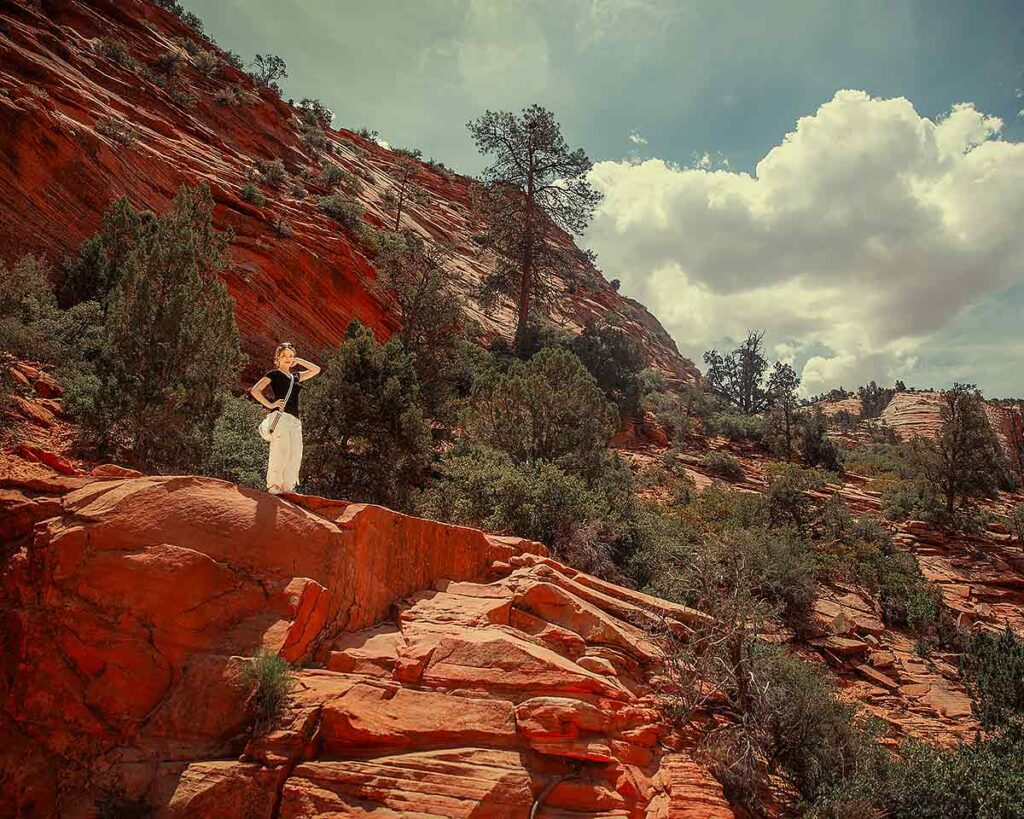
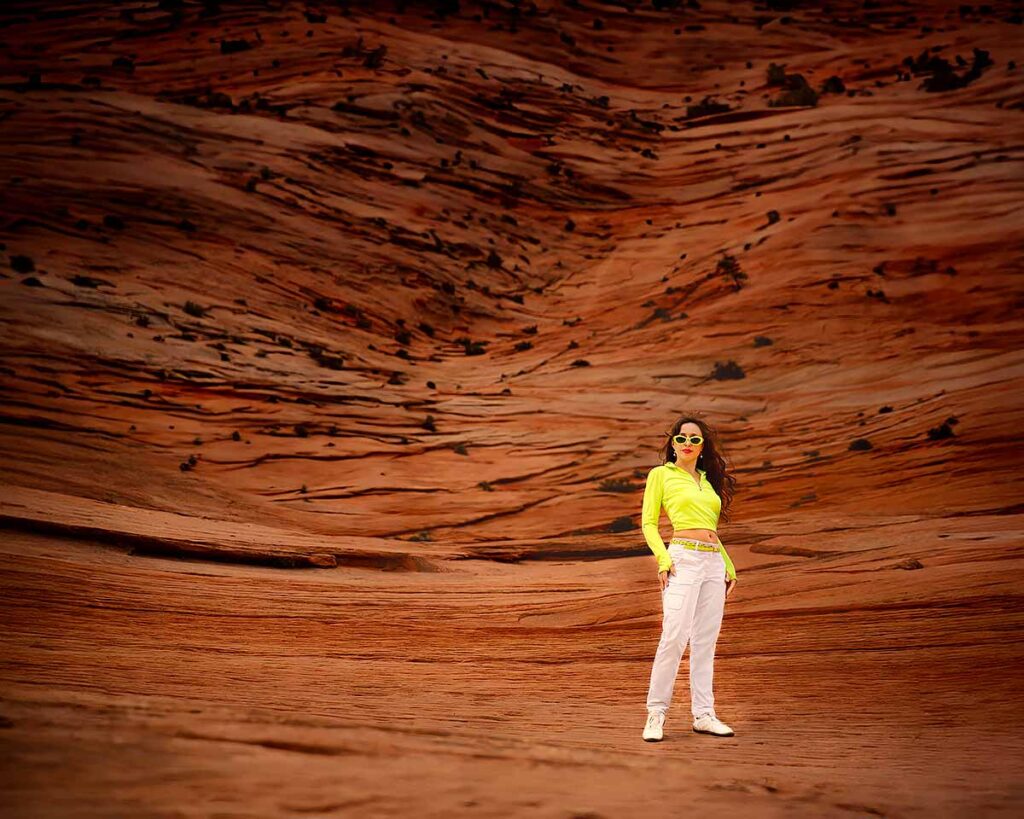
One of the most striking part of this drive through the East Zion area, just past the tunnel, is the slickrock. These are vast expanses of weathered sandstone where you can see ancient sand dunes frozen in time. Geologically known as cross-bedded sandstone, these formations are often referred to as the petrified dunes. The unique textures in these rocks make an incredible natural backdrop for both landscape and portrait photography. The swirling lines in the stone create mesmerizing patterns that follow the flow of ancient wind-blown sand that turned to rock millions of years ago. Standing among these stone waves, it feels like being on another planet, with the textures of the dunes stretching out in every direction.
Before leaving the park, there are several overlooks that offer a final view of the high peaks. Sitting on the stone walls or standing on the rocky outcrops gives you a true sense of the park’s elevation. The contrast between the bright greenery and the deep orange stone is especially vivid in this part of Zion, providing one last look at the beauty of the high desert.
Day 3 began deep inside the canyon where the scenery felt completely different. First, we explored the valley floor along the Virgin River. The bright green trees looked beautiful against the massive red cliffs. Also, the river winding through the canyon created a very peaceful feeling. This area is great because you can see the scale of the park from the bottom up.
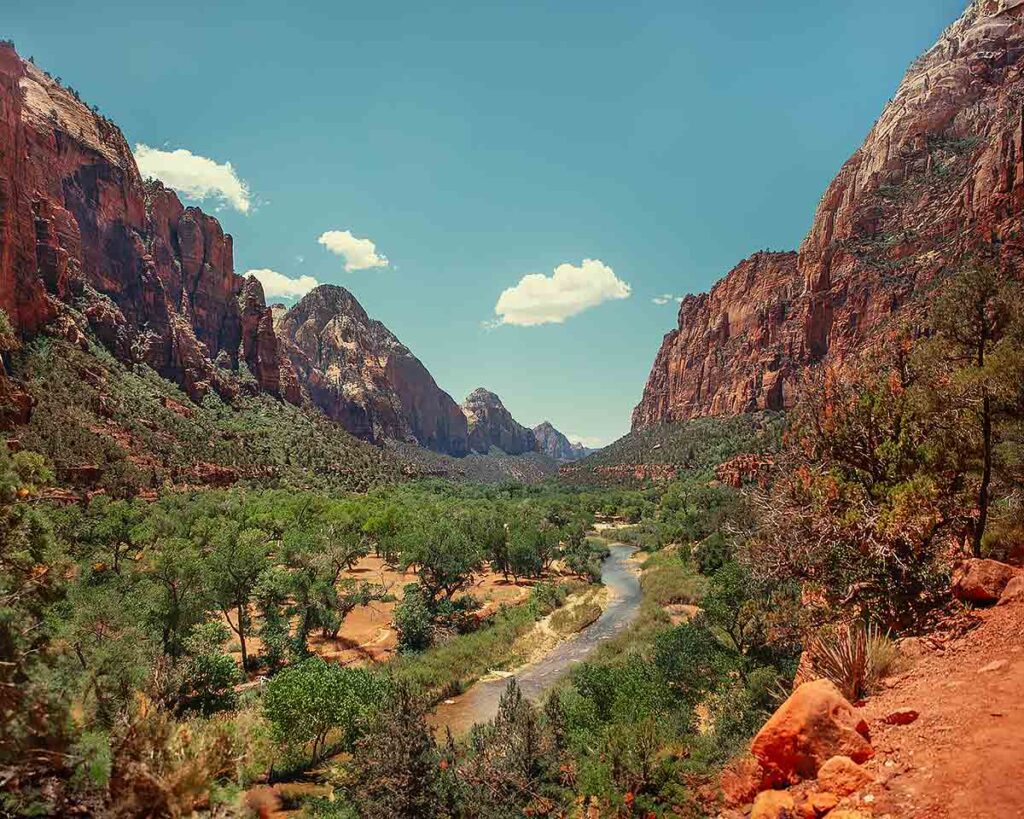
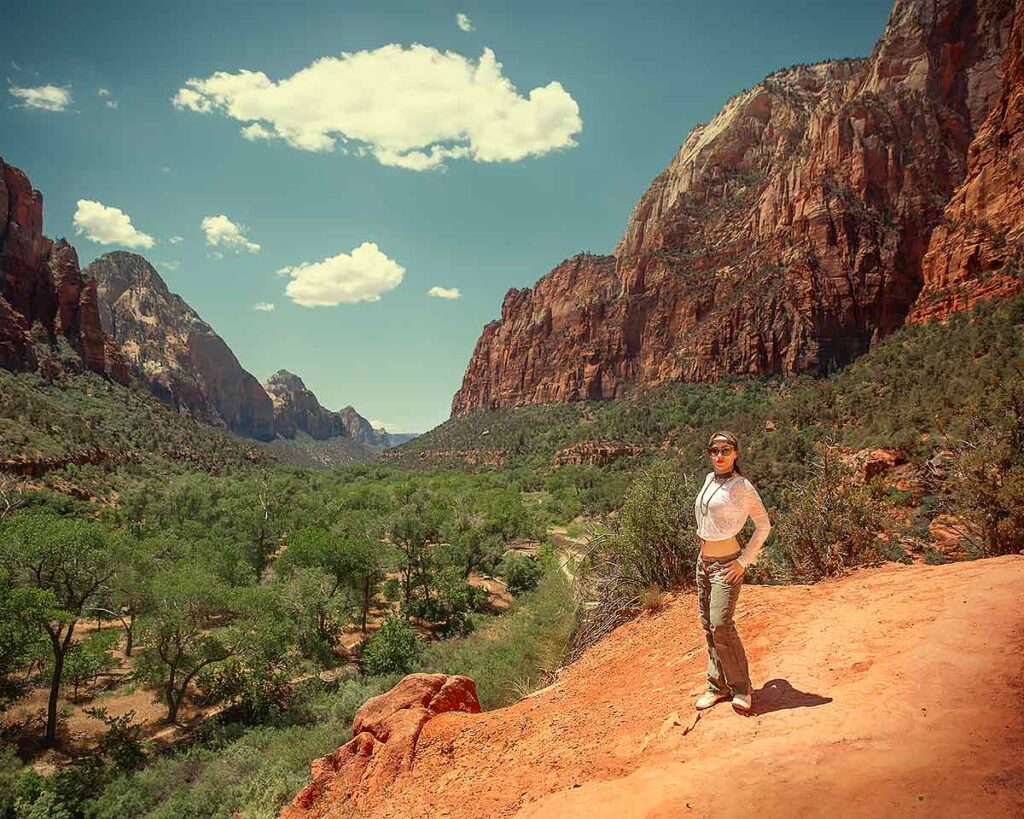
We found a massive rock right by the water. It was the perfect spot to lie back, relax, and take in the view. From this angle, you can really see the dark, stained textures of the sandstone amphitheater rising up above the pool. Also, the quiet water creates a perfect mirror for the huge cliffs and green plants. It felt so peaceful to just rest there for a moment and look at the giant stone walls around me.
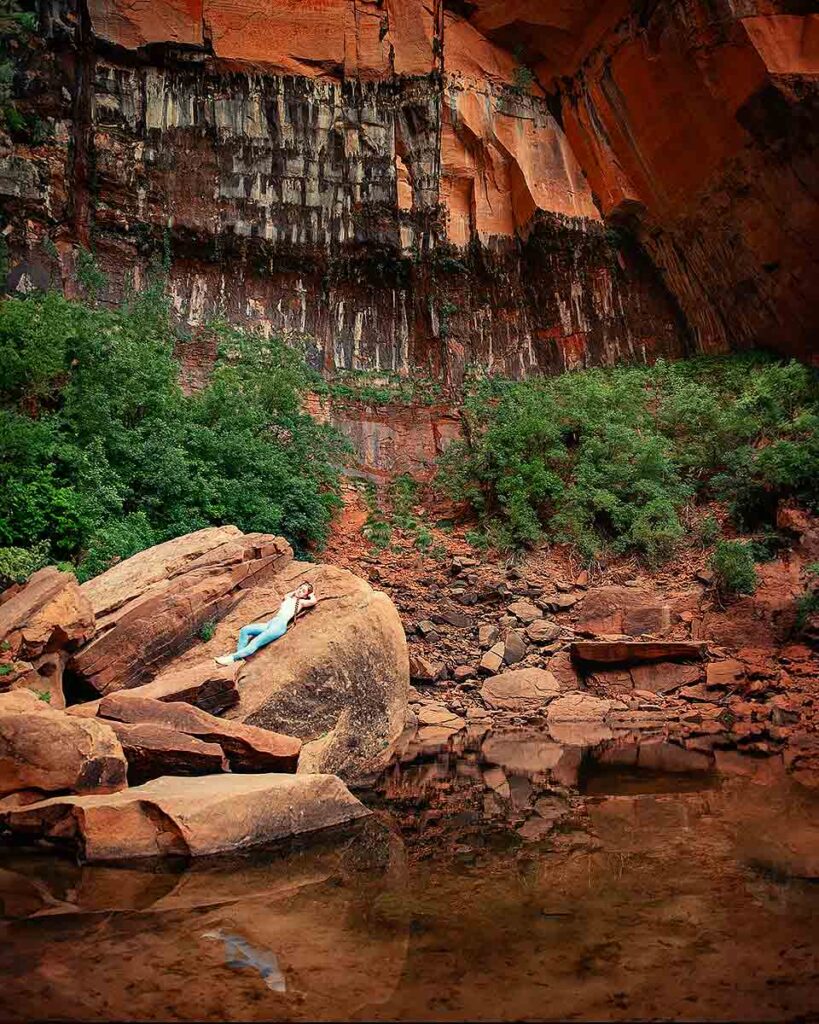
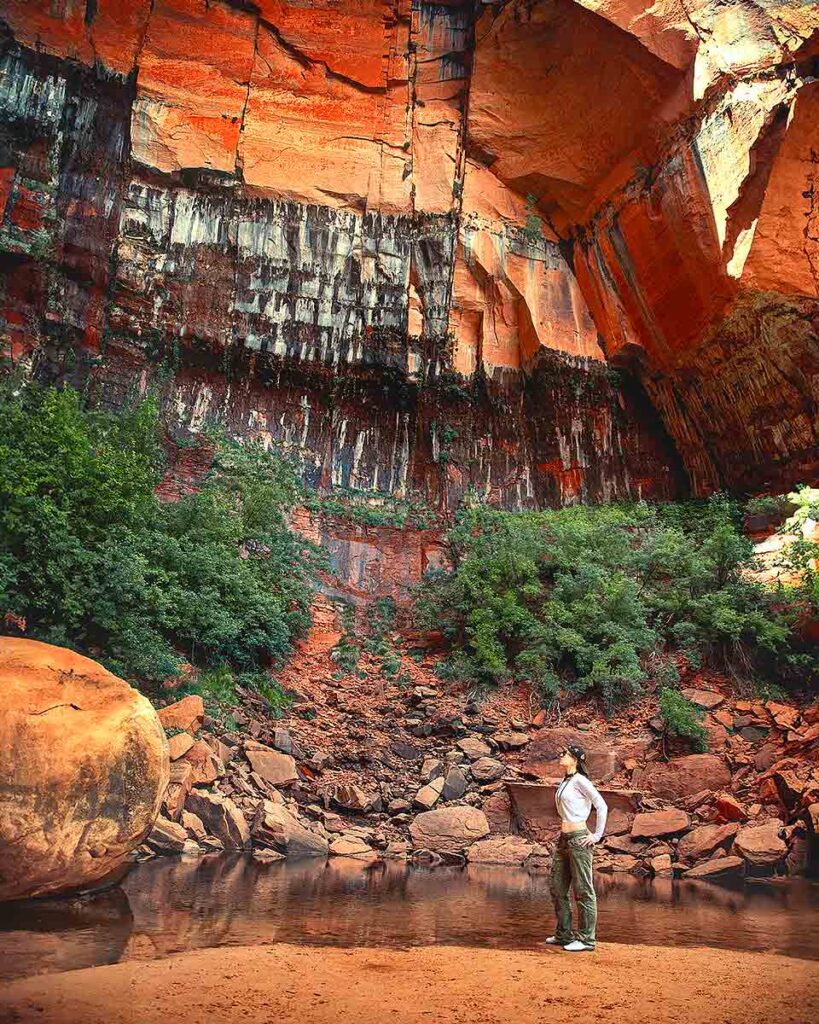
Finally, we finished the hike by walking back down the red dirt path. While we headed down, we caught one last look at the massive rock faces and the green valley below. The contrast between the bright orange trail and the distant blue sky was beautiful. It was the perfect way to end our third day of exploring the different shapes and colors of the park.
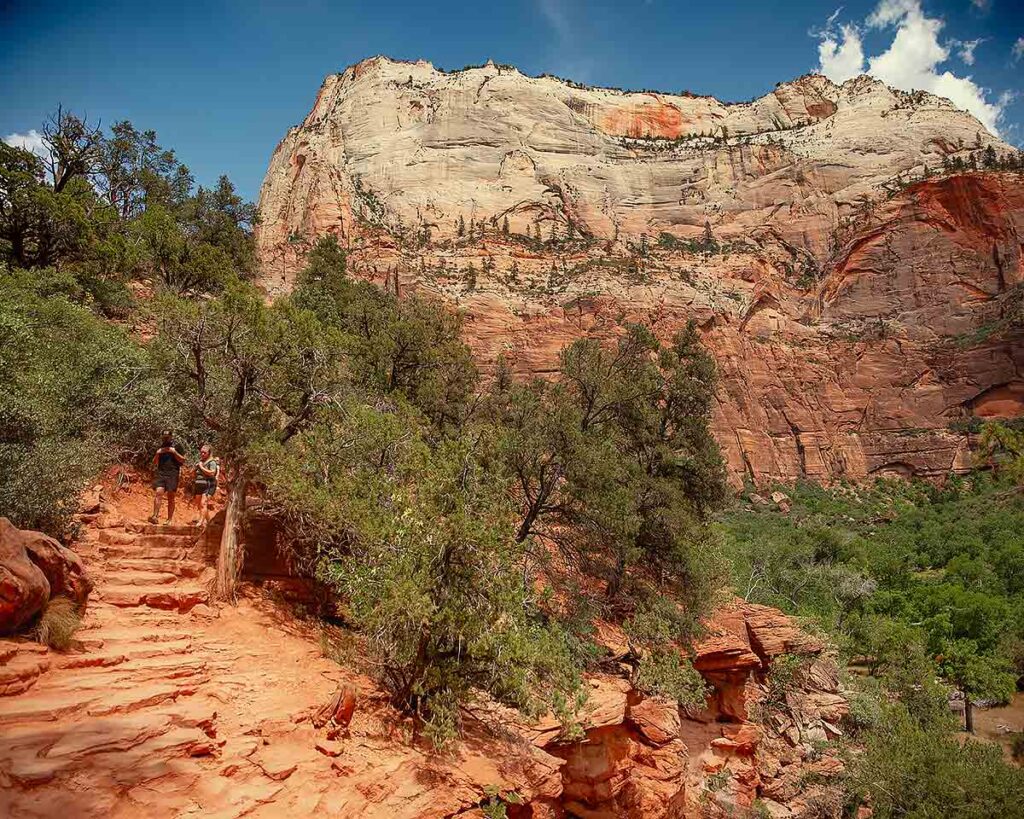
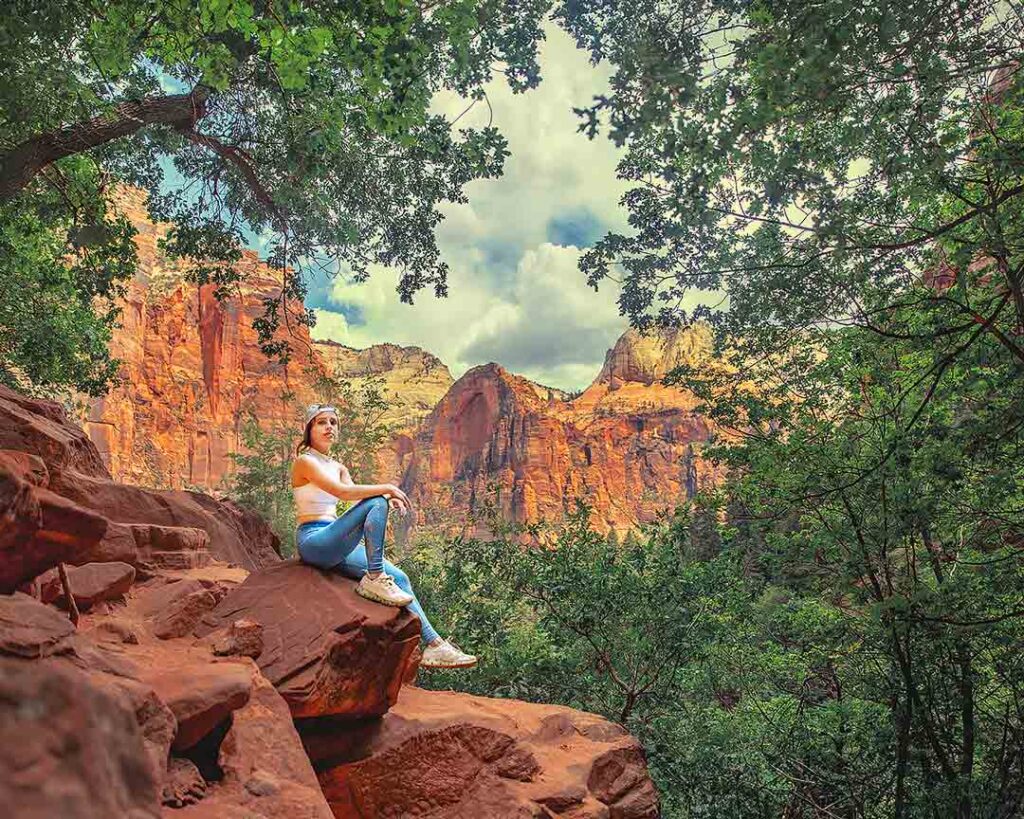
The hike to the Canyon Overlook was quite unexpected. It turned out to be probably the best hike of the trip for capturing both landscape and portrait photography. Reaching the edge at dusk provided an amazingly beautiful view as the light began to fade over the peaks.
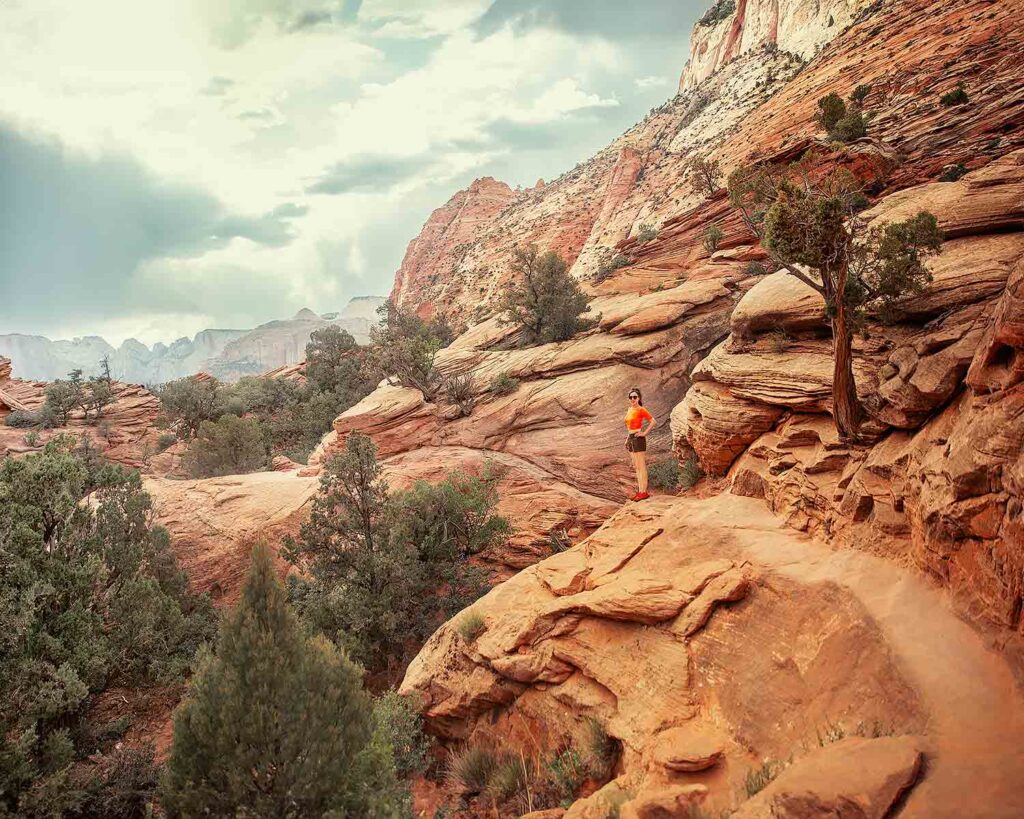
Watching the sun set over the canyon was truly mesmerizing. As a photographer, I loved how the golden hour light emphasized the textures of the massive cliffs and the winding road far below. It was the perfect moment to capture portraits where the landscape feels as vast and powerful as the stone itself.
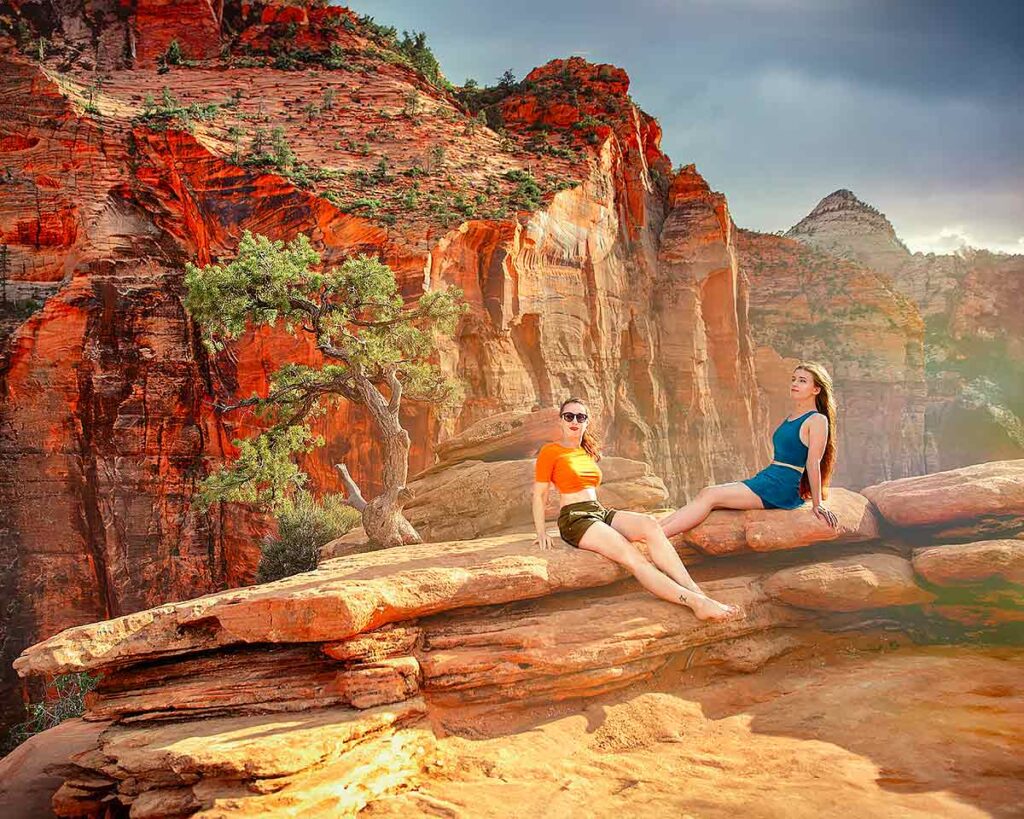
As the road climbs higher, the viewpoints show the canyon floor from a new angle. We also found a great spot to sit on a stone wall. From there, we looked down at the winding highway. The road looks tiny because the canyon is so giant. Also, the different shapes of the rocks are amazing to see. This huge space is a perfect place to take pictures.
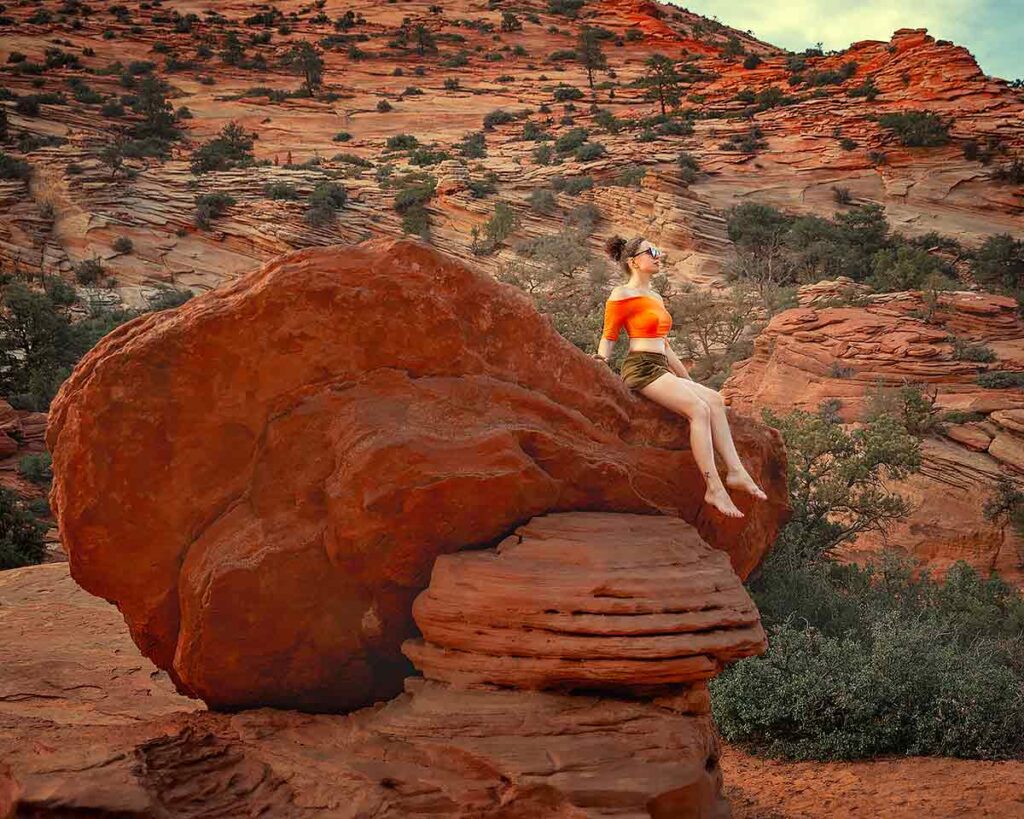
The view from the top was absolutely breathtaking. As the sun began to set, the light hit the canyon walls, highlighting the incredible depth of the landscape. Standing on the edge of these ancient formations, you can see the highway below snaking through the valley like a tiny thread.
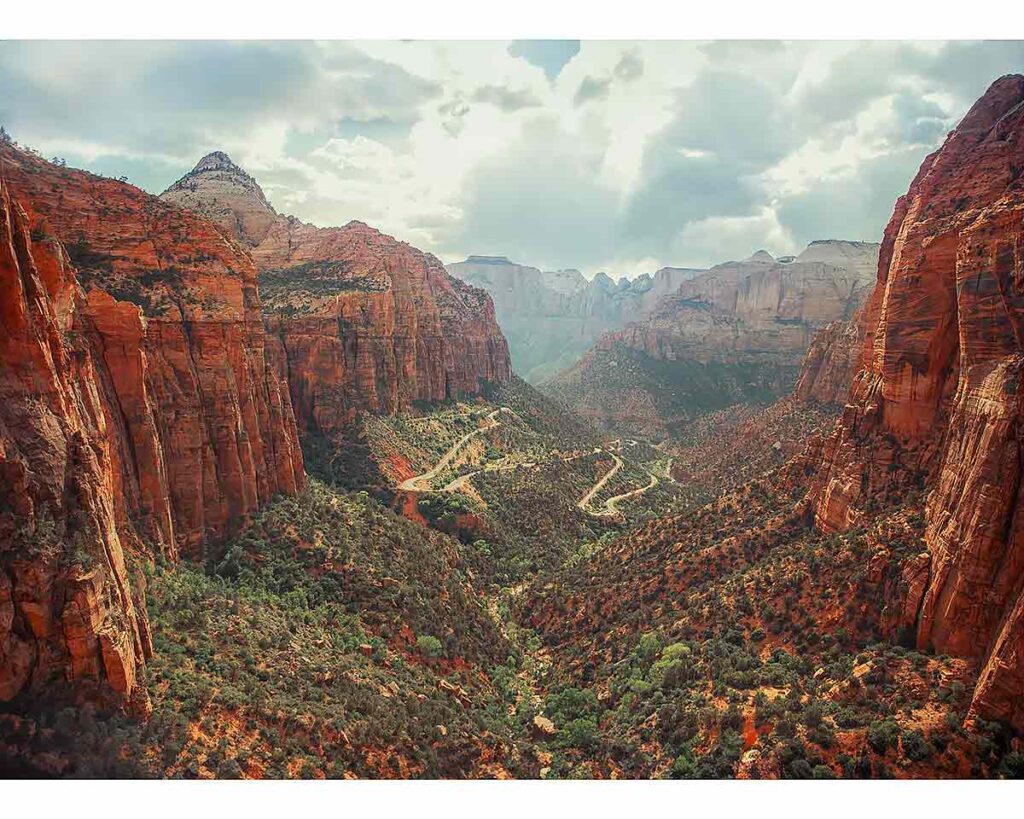
Our journey through Zion was an unforgettable experience that combined the power of massive stone walls with the soft beauty of hidden pools. Every turn on the trail offered a new perspective on how water and time have shaped this natural cathedral. It was the perfect place to explore the relationship between grand landscapes and intimate portraits.
If you want to see more of this adventure and how the landscape shifts as we travel, go to my next post about the stone spires of Bryce Canyon.




District of Columbia
Maryland
Virginia